
CBHM and MTSS in practice
Coaching and training on implementing the Comprehensive Behavioral Health Model with fidelity, data-based decision making, and universal behavioral screening with the BIMAS-2.
Professional Development
Boston's school psychologists keep growing after graduate school. Behavioral Health Services invests in professional learning that keeps the department current, builds practical skills, strengthens how the Comprehensive Behavioral Health Model is carried out in schools, and brings colleagues together to learn from one another.

Professional Learning in BHS
Professional development is woven into how Behavioral Health Services works. A district CBHM Instructional Coach coordinates professional development for school psychologists and provides one-on-one coaching on implementing the model with fidelity. Central office staff and school psychologists take part in professional development and training supported by the department's partners, and the department names high-impact training and professional development for school mental health staff as one of the six priorities its outside funding is directed to.
Learning runs in both directions. School psychologists are learners in department sessions and with national presenters, and they are also teachers: facilitating professional development for school staff is part of the Tier 1 work every BPS school psychologist does. In 2025–26, school psychologists facilitated 144 professional development sessions across the district.
The same commitment extends to the next generation. Thirty-five school psychologists served as field supervisors for 53 university trainees in 2025–26, and the department's University Supervision Committee helps oversee that training program.
In Practice
Sources: BHS Annual Report 2025–26 and department announcements.
What Professional Learning Covers
These are areas where the department's documented training, coaching, and professional learning have focused. They reflect the comprehensive role of a BPS school psychologist rather than a fixed list of required trainings.
Coaching and training on implementing the Comprehensive Behavioral Health Model with fidelity, data-based decision making, and universal behavioral screening with the BIMAS-2.
Special education evaluation, tiered counseling interventions, functional behavior assessment and behavior support plans, and de-escalation.
Trauma-sensitive practices, mental health supports, and strengths-based approaches to student wellbeing.
Consulting with teachers and families, facilitating school teams, and providing systems-level support.
Field supervision of practicum students and interns, guided by the University Supervision Committee, in a department recognized by NASP for model intern supervision.
A sequential arc of learning on the ethical adoption of AI across school psychology practice, and applied research through the BHS Research Team.
Drawn from the BHS Annual Report 2025–26, the department's training program description, and leadership profiles.
Featured Professional Learning
Behavioral Health Services brings national voices in school psychology to Boston to work directly with the department's school psychologists, and returns to them over time rather than for a single session.
Nationally certified school psychologist, founder and CEO of School Psych AI, and co-author of Hacking Deficit Thinking
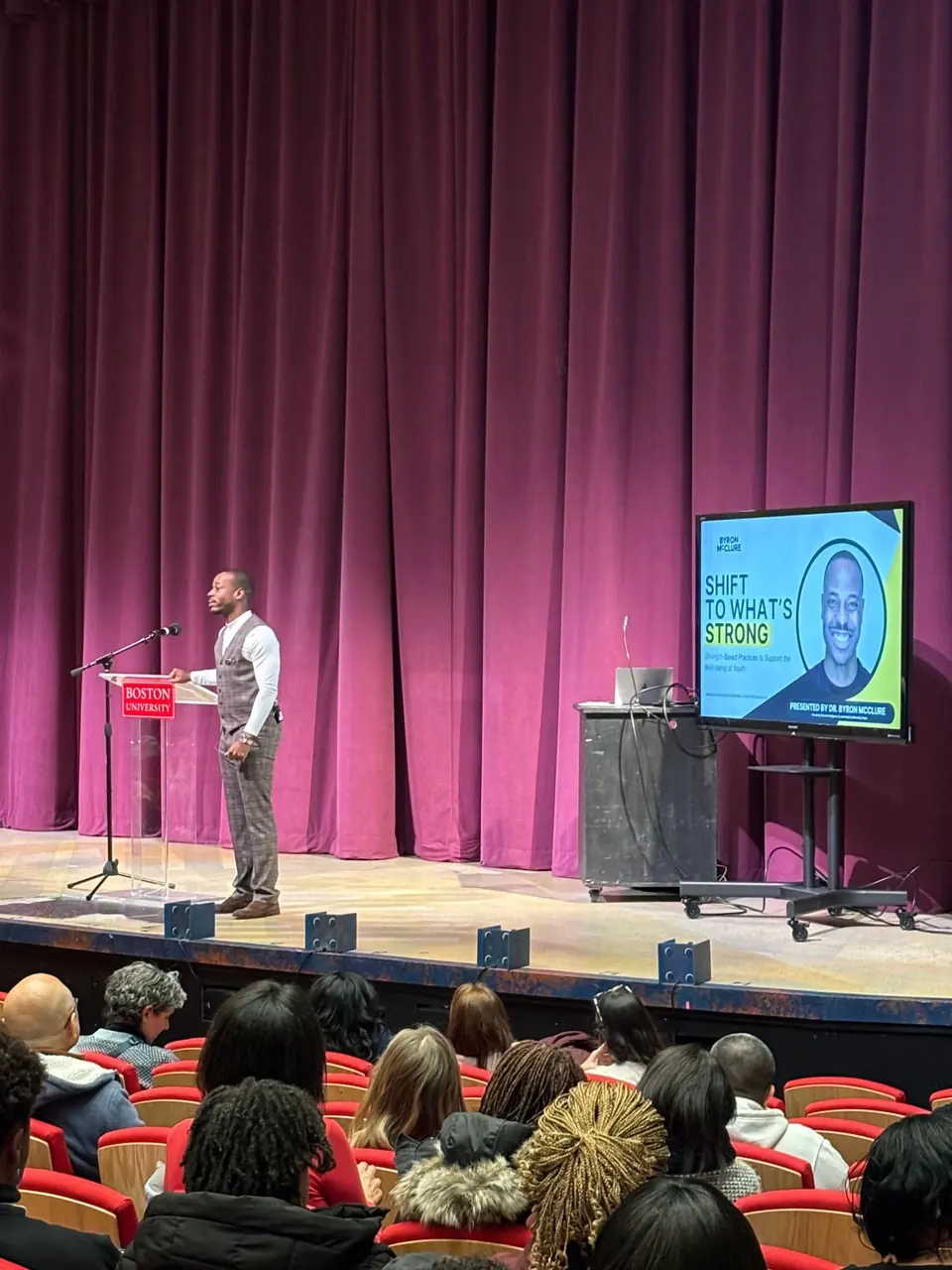
In 2025–26, BHS partnered with Dr. Byron McClure to co-develop a sequential arc of learning that guides the ethical adoption of AI across the full spectrum of school psychology practice. The department's early findings pointed to increased use, confidence, and skill, and to reduced administrative burden for school psychologists.
The partnership continues for the current school year. Dr. McClure leads monthly professional learning for BPS school psychologists, and every school psychologist in the district has access to School Psych AI through the partnership. His sessions have been warmly received by Boston's school psychologists, and the department frames the work around continued learning, innovation, and support for school psychologists across BPS.
The collaboration reaches beyond the monthly sessions. Dr. McClure gave the keynote at the 2026 Boston School-Based Behavioral Health Collaborative Annual Conference at Boston University, joined Senior Director Dr. Andria Amador on the Boston School Psychs Podcast, and is scheduled to return to the podcast for two episodes this school year. At the 2026 NASP Annual Convention, four BPS school psychologists presented alongside him on implementing AI to support sustainable practice.


Ongoing Professional Growth
Alongside department professional development, BPS school psychologists grow through conferences, supervision, research, and citywide collaboration. These are opportunities the department supports, not requirements.
An award for professional development travel that helps school psychologists attend and present at national conferences. In 2025–26 it sent four school psychologists to present at the NASP Annual Convention in Chicago.
About the FundBHS staff gave eight national conference presentations in 2025–26, at the Advancing School Mental Health Conference and the NASP Annual Convention, on topics from AI use and student-centered advocacy to restorative discipline and school climate.
2025–26 Research AccomplishmentsSchool psychologists work alongside university and hospital partners on the department's 2025–2028 Research Agenda, from survey design to IRB-approved longitudinal studies and policy papers.
Research & ReportsThirty-five school psychologists served as field supervisors in 2025–26. Supervising practicum students, interns, and doctoral fellows is itself a professional practice the department trains and recognizes.
Training ProgramsThrough the Boston School-Based Behavioral Health Collaborative, more than 300 mental health staff and partners take part in professional development each year, and its annual conference covers topics from peer supervision to strengths-based practice.
The CollaborativeProject PROVIDE's monthly professional development series has offered more than 200 hours of free professional development to BPS and community mental health practitioners since 2023.
About Project PROVIDE